Every now and then, I have a conversation with a client that follows a very familiar pattern.
The client will describe themselves as approachable, warm, collaborative, and easy to work with. They genuinely believe these qualities represent who they are because, from their perspective, they do. After all, they know their intentions. They know what goes on inside their mind. They know that they care deeply about people, that they work hard, and that they always try to do the right thing.
Then comes the interesting part.
When they receive feedback from colleagues, team members, or clients, the words used to describe them are often very different. Sometimes they are perceived as distant when they believe they are being professional. At other times, they are seen as hesitant when they think they are being thoughtful. Occasionally, they are perceived as intimidating when they believe they are simply being focused.
It is in these moments that an important realization begins to emerge.
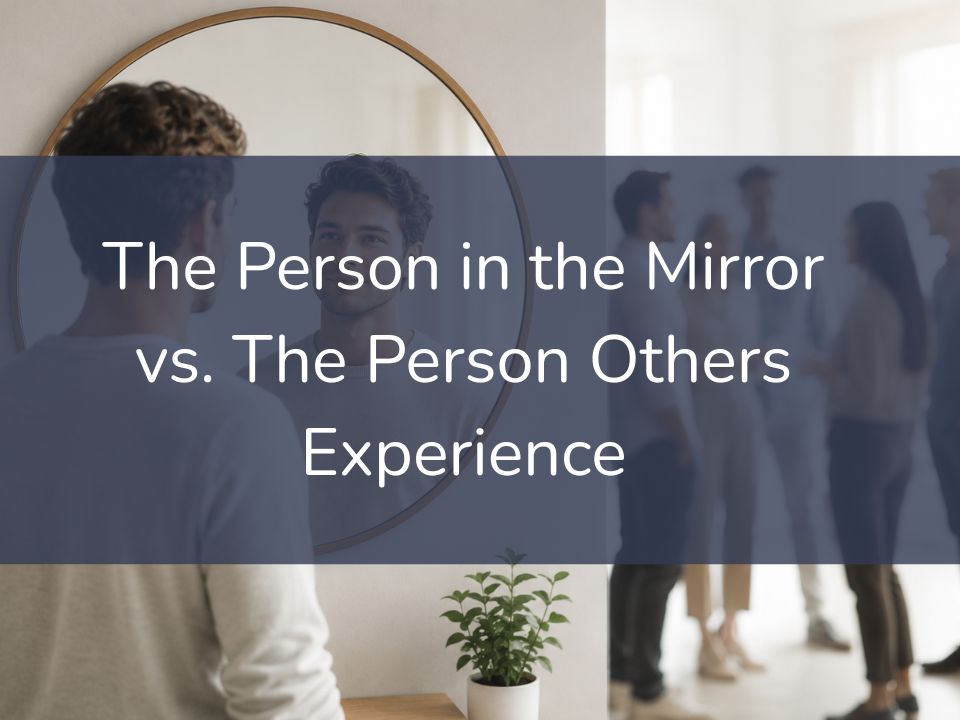
The person we see in the mirror is not always the person the world experiences.
“We judge ourselves by our intentions and others by their actions.” — Stephen M. R. Covey
The truth is that most of us spend our lives looking at ourselves from the inside out. We understand our motives, our values, our fears, and our aspirations. We know the reasons behind our actions, the context behind our decisions, and the effort that goes into everything we do. It is therefore natural for us to assume that others see us the same way.
But they don’t.
The people around us can only experience what we choose to show them. They don’t have access to our intentions. They don’t hear our internal dialogue. They don’t know how nervous we were before a presentation or how much thought went into an email. They simply observe our appearance, our behavior, and our communication, and from those observations they create an impression.
This is one of the reasons why professional presence is such a fascinating topic. It sits at the intersection of identity and perception. It requires us to ask questions that can sometimes feel uncomfortable. Questions such as: How do people experience me when I walk into a room? What assumptions might they be making before I have spoken a single word? What aspects of my appearance, behavior, or communication might be unintentionally sending the wrong message?
The answers to these questions are rarely about changing who you are. In fact, I would argue that the goal is never to become someone else. The goal is to create greater alignment between who you are and how you are perceived.
Think about someone you admire professionally. Chances are, what you appreciate about them is not perfection. It is consistency. Their appearance aligns with their role. Their behavior reflects their values. Their communication reinforces their credibility. There is very little disconnect between who they are and how they show up.
That alignment creates trust.
And trust is one of the most valuable currencies in any professional relationship.
What makes this particularly relevant today is that we live in a world where opportunities often emerge from perception before performance. Before someone decides to hire you, collaborate with you, promote you, or recommend you, they form an impression. That impression may not tell the whole story, but it often determines whether they are willing to learn more.
This is why developing self-awareness is one of the most powerful investments you can make. Not because it helps you become more polished, but because it helps you become more intentional.
When you become curious about how others experience you, you begin to notice things that previously went unquestioned. You become aware of habits, patterns, and signals that may be supporting your goals—or quietly working against them. More importantly, you gain the ability to make conscious adjustments rather than leaving your professional image to chance.
One of the simplest exercises I often recommend is asking a handful of trusted colleagues or friends to describe you in three words. Not the words they think you would like to hear, but the words that genuinely come to mind when they think about interacting with you.
The answers can be incredibly revealing.
Sometimes they confirm what you already know about yourself. Other times they uncover blind spots that have been hiding in plain sight for years.
Either way, they provide valuable insight into the gap between self-perception and external perception.
And that gap is where growth begins.
Because the goal is not to become someone different. The goal is to ensure that the person you see in the mirror is the same person others experience when they meet you.
This week, take a moment to think about the impressions you leave behind after a conversation, a meeting, or a presentation. Are those impressions aligned with how you would like to be remembered? The answer may reveal opportunities for growth that no course, certification, or promotion ever could.