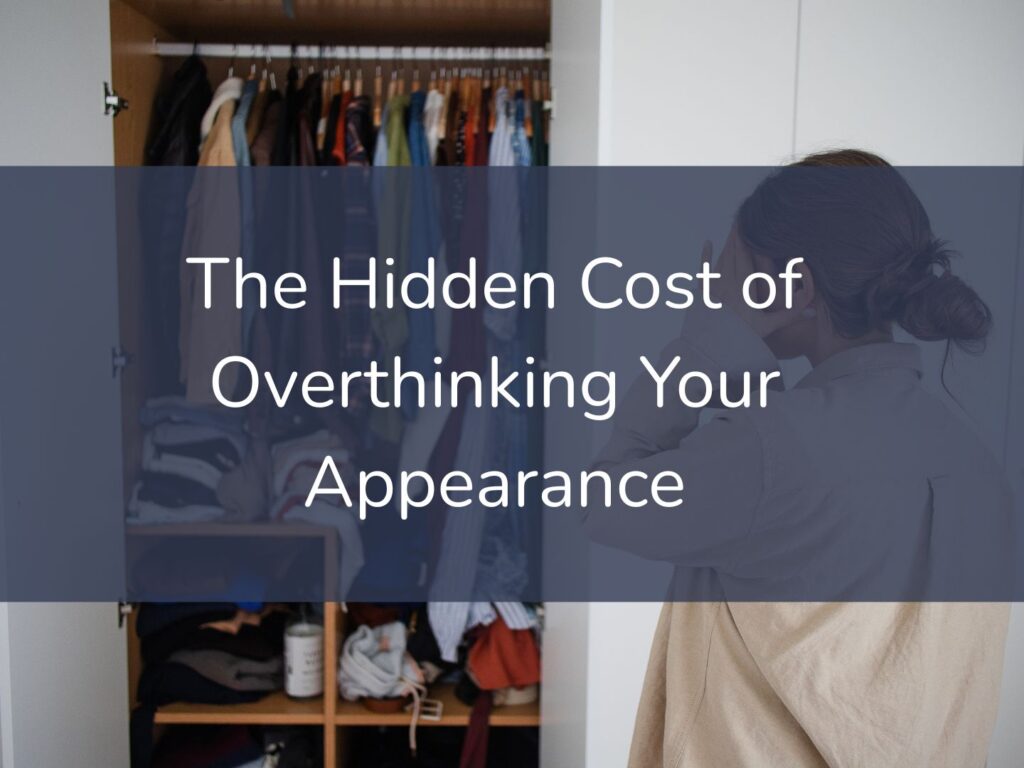
It often starts as a simple moment.
You stand in front of your wardrobe, scanning through your clothes, convinced that something will just “click.” You pick an outfit, try it on, look in the mirror, and immediately feel unsure. So you change. And then you change again. And sometimes, even after multiple attempts, nothing feels quite right.
By the time you finally settle on something, you’re already mentally exhausted.
And the day hasn’t even begun.
“Overthinking is the biggest cause of our unhappiness.” — Dale Carnegie
What most people don’t realize is that this isn’t really about clothes. It’s about the mental load that comes with decision-making, especially when there is no clear system in place to support it.
Every time you stand in front of your wardrobe without clarity, you are forcing yourself to make multiple decisions at once. What works? What matches? What feels appropriate for today? What reflects how I want to be seen? And when these questions don’t have immediate answers, they create friction.
That friction often turns into self-doubt.
You begin second-guessing not just your outfit, but yourself. You wonder if you’re overdoing it or underdoing it. You question whether you look the part. And this internal dialogue, although subtle, can impact how you carry yourself through the rest of the day.
What makes this even more frustrating is that having more options doesn’t solve the problem. In fact, it often makes it worse. The more choices you have, the harder it becomes to commit to one. This is what decision fatigue looks like in action.
And over time, it becomes a pattern.
But here’s the shift that changes everything: moving from reactive decisions to intentional preparation.
Instead of approaching your wardrobe as something you figure out in the moment, you begin to treat it as something that is already working for you in the background.
This could be as simple as identifying a few combinations that you know work well and keeping them ready. It could mean understanding what silhouettes suit you best so you don’t have to rethink them every single time. It could even mean repeating outfits without attaching guilt to it—because repetition is not a lack of creativity; it is a sign of clarity.
When you reduce the number of decisions you need to make, you create space for confidence to step in.
Getting dressed becomes quicker. Easier. More intuitive.
And most importantly, it stops draining your energy.
Because the goal was never to have endless options.
The goal was to have reliable ones.
This weekend, instead of adding more to your wardrobe, spend some time simplifying it. Create three outfits that you can wear without overthinking. Notice how that one small step changes your mornings.