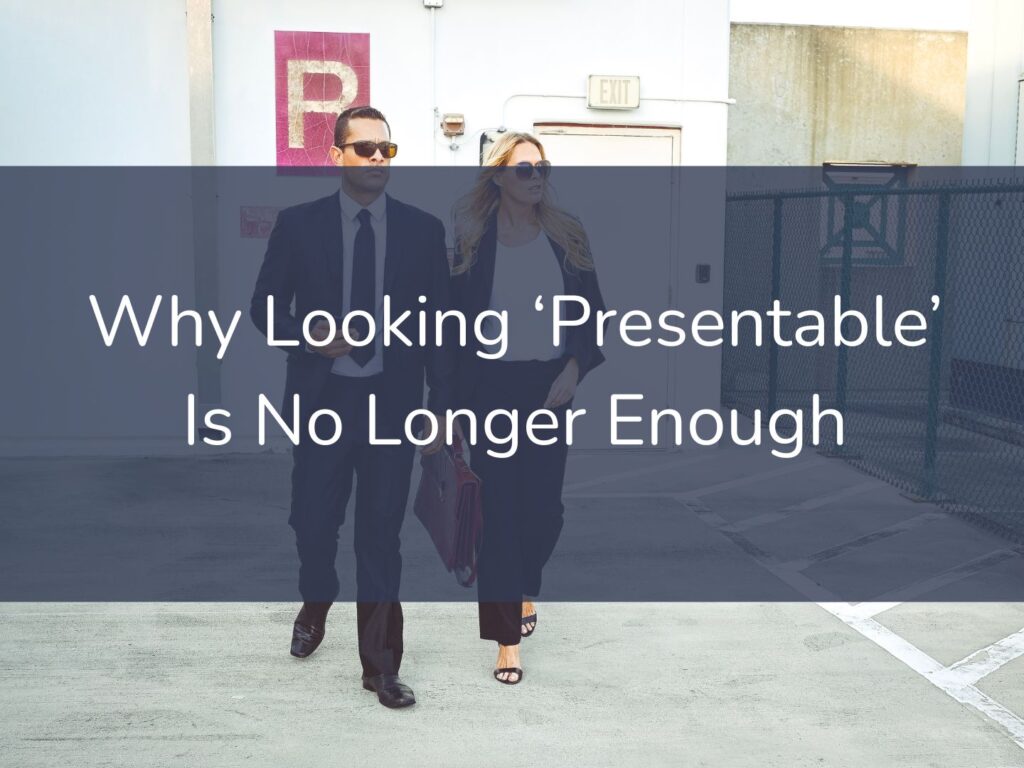
For the longest time, being “presentable” was considered the goal.
You showed up in neat clothes, ensured your grooming was in place, and avoided anything too loud or attention-grabbing. It was about blending in just enough to be seen as appropriate, reliable, and professional. And for a while, that worked. It checked the boxes. It met expectations.
But here’s what’s changed.
Today, being “presentable” is no longer a differentiator—it’s the baseline.
“Style is a way to say who you are without having to speak.” — Rachel Zoe
In a world where personal branding is becoming increasingly important, people are no longer just noticing whether you look neat. They are subconsciously asking deeper questions every time they see you. Do you look intentional? Do you reflect a certain level of self-awareness? Is there something about you that feels distinct, yet appropriate?
And this is where many professionals unintentionally hold themselves back.
Because in an effort to stay “safe,” they end up becoming invisible.
When your appearance is purely functional—when it is only designed to meet expectations and not express anything beyond that—you risk blending into the background. You may be doing everything right on paper, but you’re not creating recall. And in environments where opportunities often come to those who are remembered, this can quietly work against you.
This doesn’t mean you need to completely reinvent your style or suddenly start dressing in a way that feels unfamiliar. In fact, doing that would likely have the opposite effect—it would feel forced, and people would sense that disconnect immediately.
What replaces “presentable” is something far more powerful: intentional presence.
Intentional presence is not about being loud or trendy. It is about being thoughtful. It is about making choices that reflect who you are, where you are, and where you’re headed. It’s the difference between wearing something because it’s acceptable and wearing something because it aligns.
It might show up in the colors you choose, the way your clothes fit, or even a small detail that feels uniquely “you.” These are not dramatic shifts, but they are meaningful ones.
And over time, they build a sense of identity.
The kind where people may not always remember exactly what you wore—but they remember how you showed up.
Take a moment to look at your current wardrobe—not from the lens of “Is this presentable?” but from the lens of “Does this represent me?” Sometimes, the smallest shift in intention creates the biggest impact.